
Open AI x Yelp
WORK IN PROGRESS
[*] PRESS COVERAGE
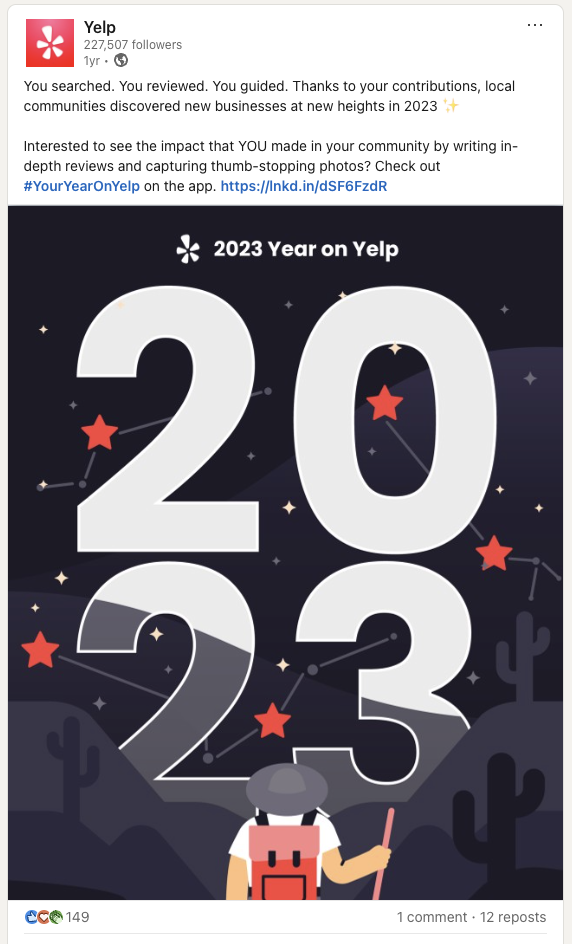
Covered by the Yelp blog and press release.
[I] THE PEOPLE PROBLEM
Inability to track progress: It can be difficult for Yelp contributors to remember or quantify what they've accomplished or discovered over a year.
Difficulty of recollection: Users / contributors also forget favorite places, songs, or experiences over time.
Personalization & sharing: Users crave personalized insights and easy ways to express their tastes on social media.
Feeling unrecognized or unappreciated: Contributors sometimes feel their activity is unnoticed or not valued.
Boredom or content fatigue problem: Regular platform use can become routine or feel stale.
Lack of Motivation to Engage: Yelp contributors sometimes lose interest or wonder if there's a point to writing reviews, uploading photos/videos, etc.
[II] BUSINESS PROBLEM
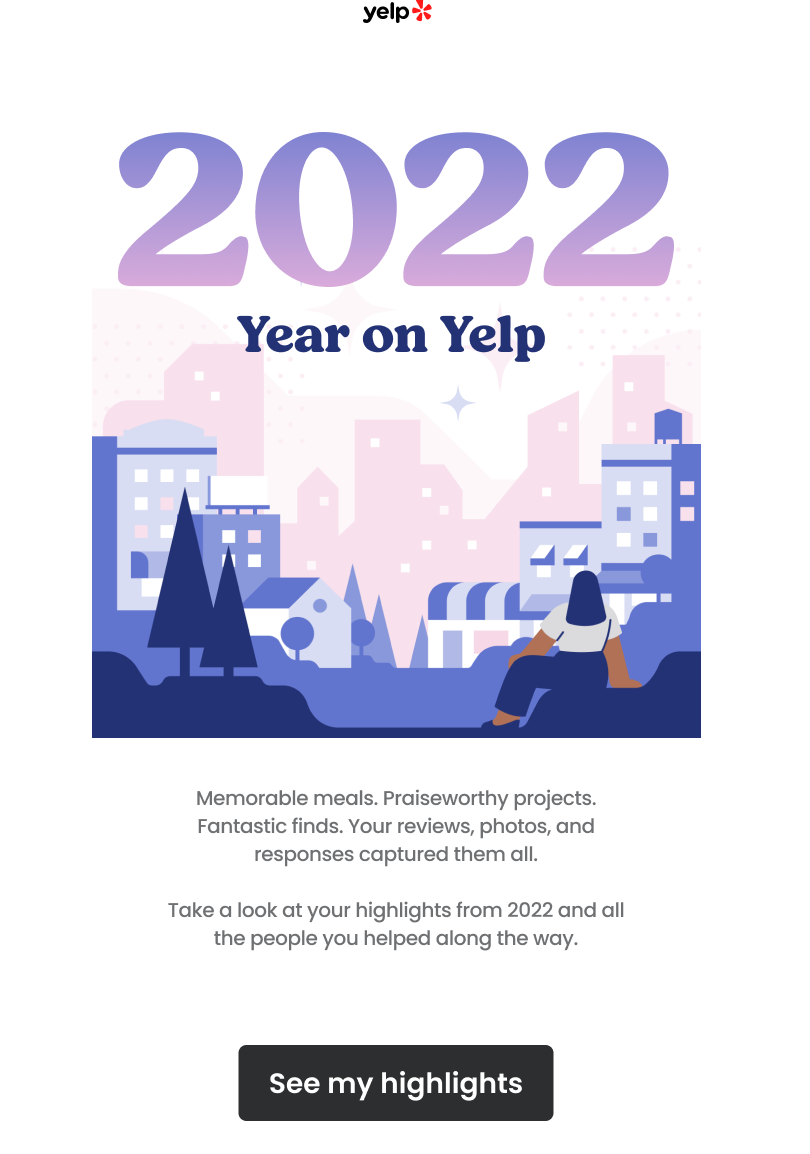
Repetitive themes the last two years in 2021, and 2022 leading to engagement stagnation
User engagement & retention: Users may disengage or forget about Yelp as a platform over time.
Repetitive themes: The Year on Yelp reviews from last two years had the same repetitive theme, and engagement & CTR metrics were falling flat.
Brand differentiation: Competing platforms may offer similar core functions that Yelp & its customer base would miss out on.
Increasing content generation: User-generated content (reviews, ratings, media content) is critical to Yelp’s flywheel & value, but motivating users can be tough.
Community building: Fostering a sense of belonging and connection can be hard, especially in digital spaces.
[III] GOAL
Providing users with personalized yearly insights like ‘Year on Yelp’ will increase their connection to Yelp as a platform, drive higher engagement, social sharing, retention, and organic brand advocacy.
[IV] METRICS
Primary Metrics
Engagement / CTR rate: % of targeted users who view/interacted.
Social shares: Number or % of users who shared their Year in Review on Yelp externally (social platforms, messaging, etc.).
Post-feature activity rate: Change in key actions (e.g., reviews written, photos uploaded, bookmarks) after engaging with the feature.
Secondary Metrics
Repeat visits: Increase in sessions/active days in the weeks following launch.
User retention: Retention rates of users exposed to the feature vs. control group (e.g., 1-month or 3-month retention).
Content generation: Number of new reviews, photos, media, reactions or ratings after feature release.
Time spent on site/app: Average duration of sessions where the feature was used.
Increase in sessions: Increase in sessions like WAU or MAU.
[V] TEAM & MY ROLE
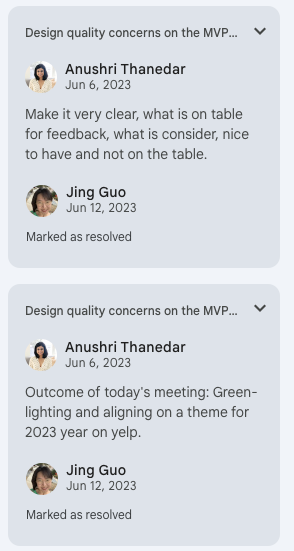
Guiding the team through ambiguity, unblocking IC2 and moving towards clarity.
Team: Hands-on PD Manager (myself), Product Designer, Senior PM, Group PM, Lead IC Eng.,Eng Manager, Animator, Creative marketer, Product Marketing Manager
Timeline: 3 months (Aug 2023 - Oct 2023)
My responsibilities: Pitching the change of theme, procuring resources & investment, leading divergent thinking & brainstorming workshops, leading end-to-end design, resolving cross-functional stakeholder misalignment between PMs, marketing, copy, creatives, PDs, enggs, mentoring junior designer through ambiguity, and upholding a high bar for clarity, delight, and community value in contributor experiences. Defining scope, and managing timelines for launch.
[VI] APPROACH
The project navigated a complex and dynamic “messy middle,” managed with organization and clear oversight throughout each phase.
With strong viewpoints from stakeholders across Product, Engineering, Marketing, Creative, Studios, UX Writing, and Product Design, frequent touchpoints and ongoing stakeholder alignment were key to overcoming challenges.
Divergent thinking workshops, collaborative working sessions, iterative feedback cycles, and structured meeting cadences culminated in an outstanding result that the entire team was proud to deliver.
Brainstorming and visioning workshop
[VII] USER TESTING
“
“I loved what this did at the end of the year to help reinforce that we contribute to the site for public service! Sharing the impact and feeling appreciated for it goes a long way for brand affinity””
A survey of 10 YOY recipients showed positive brand impact and excitement for popular content and categories.
Users liked the top review/photo section the most, followed by the most reviewed category section.
They enjoyed the personalized data and some saw YOY as a journal to reflect on the year.
Overall, YOY reinforced why they contribute on Yelp and made the brand feel fun and relevant.
[VIII] CONCEPT TESTING
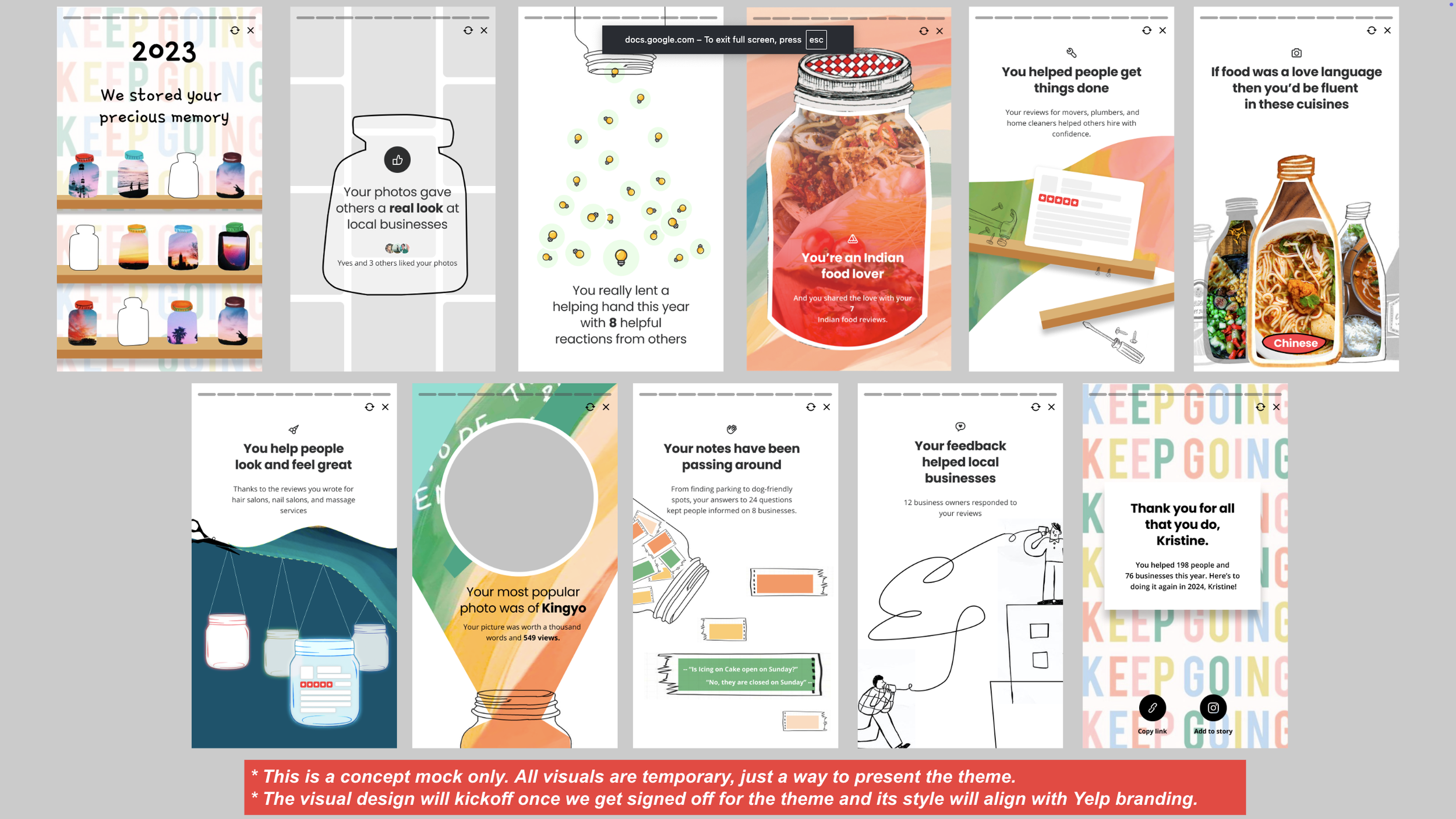
Two divergent themes were presented as an output from the brainstorming workshop.
The themes were evaluated based on their uniqueness, relevancy to Yelp, clarity, ease of execution, and ability to personalize.
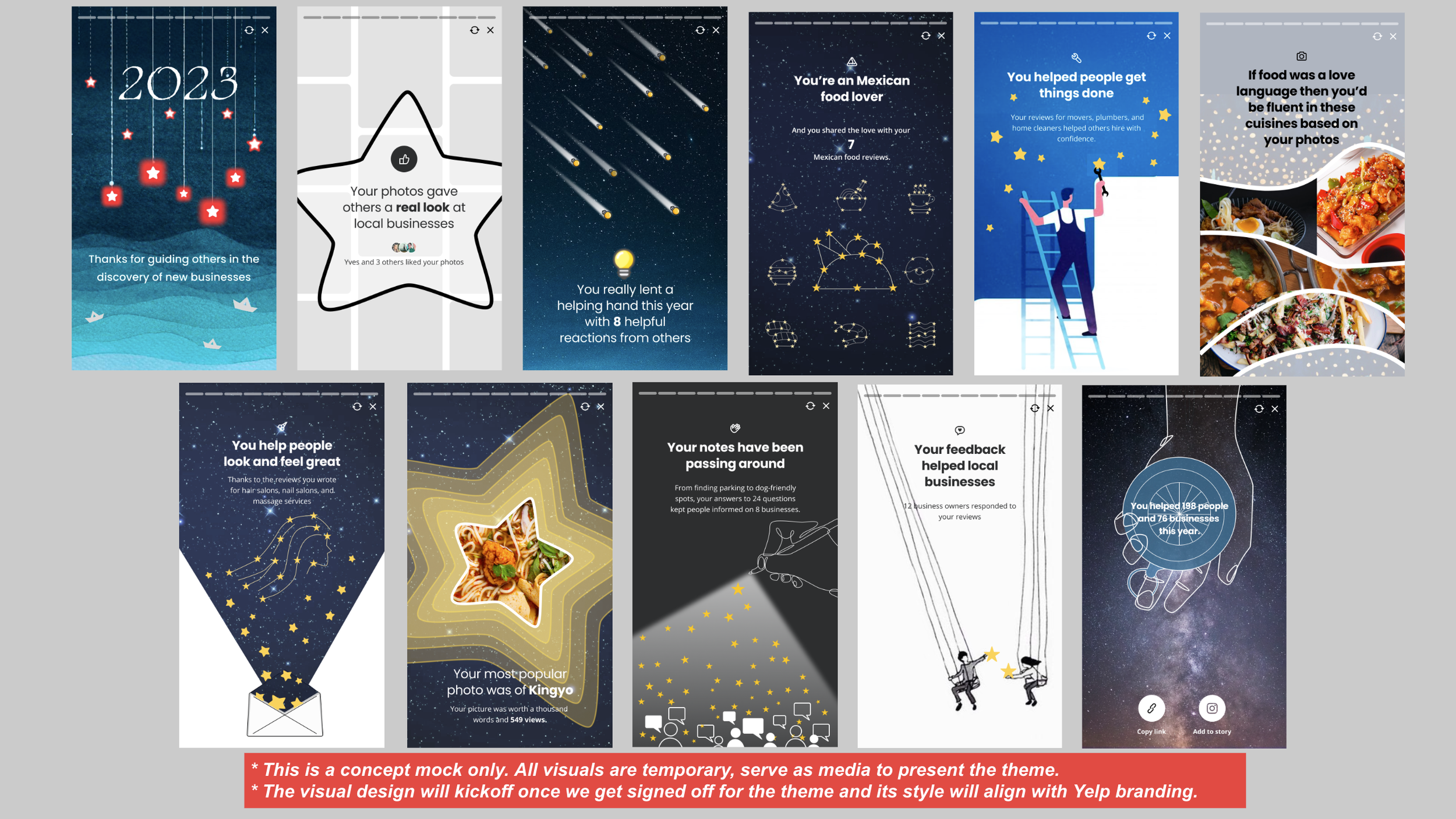
Theme 1: Stars as a guide
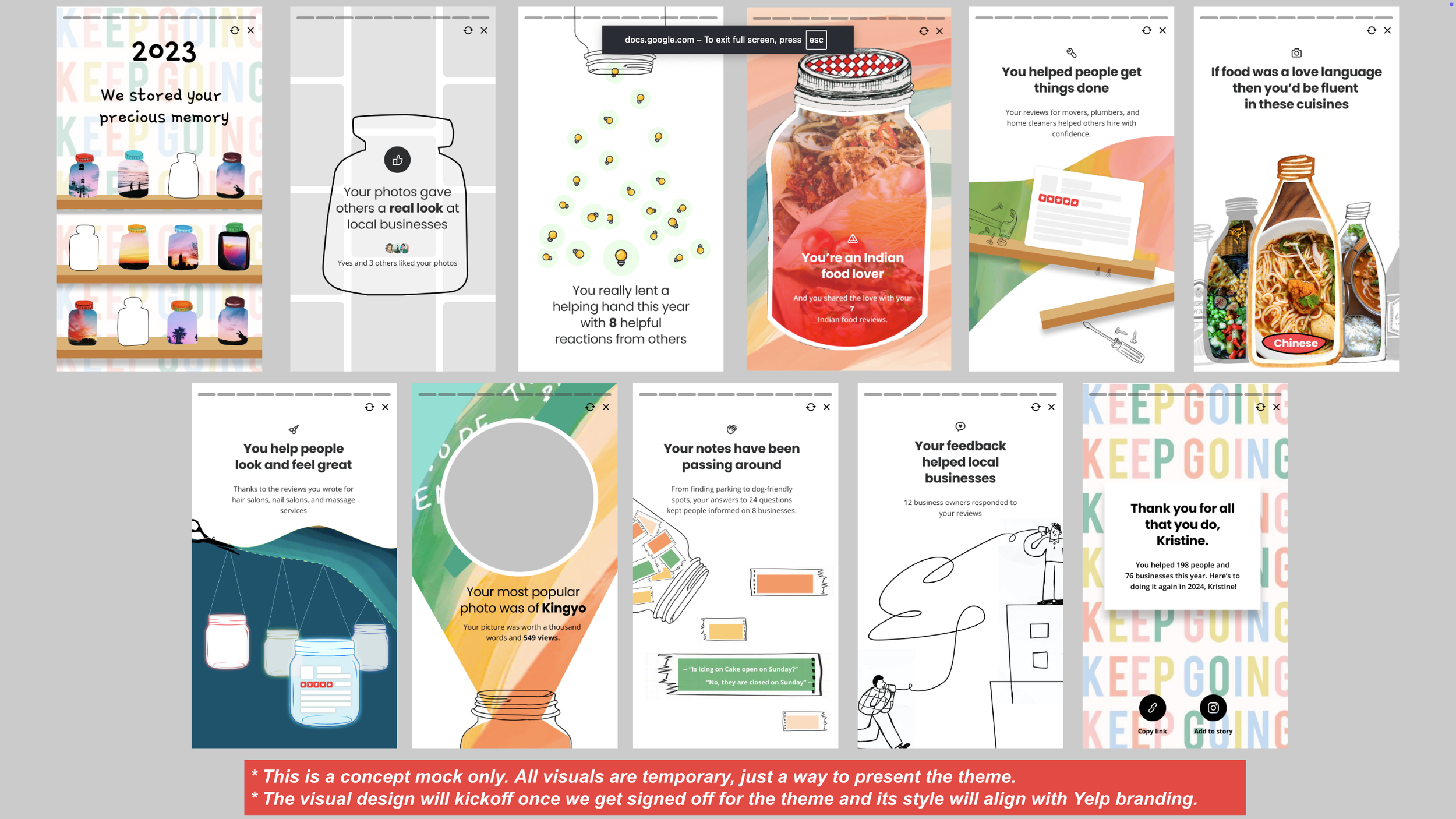
Theme 2: Jars of memories
[VIII] WHAT WAS SHIPPED / EXPERIMENTED / FINAL DESIGNS:
OVERALL EXPERIENCE:
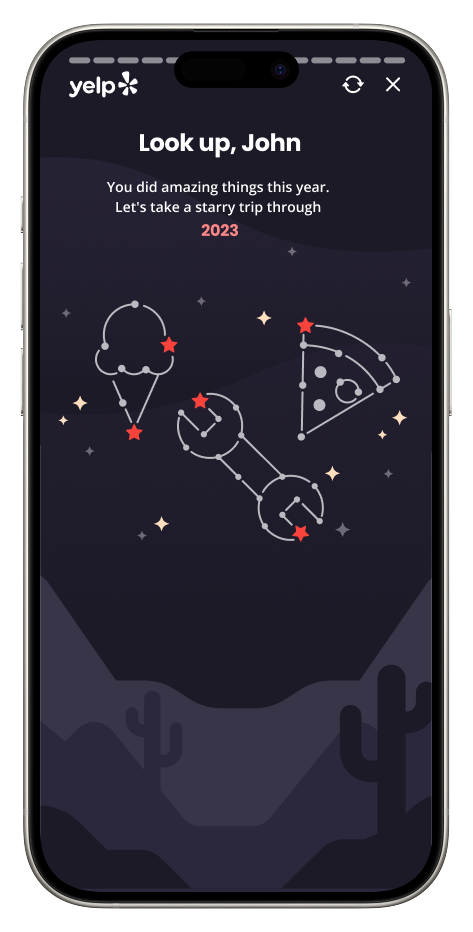
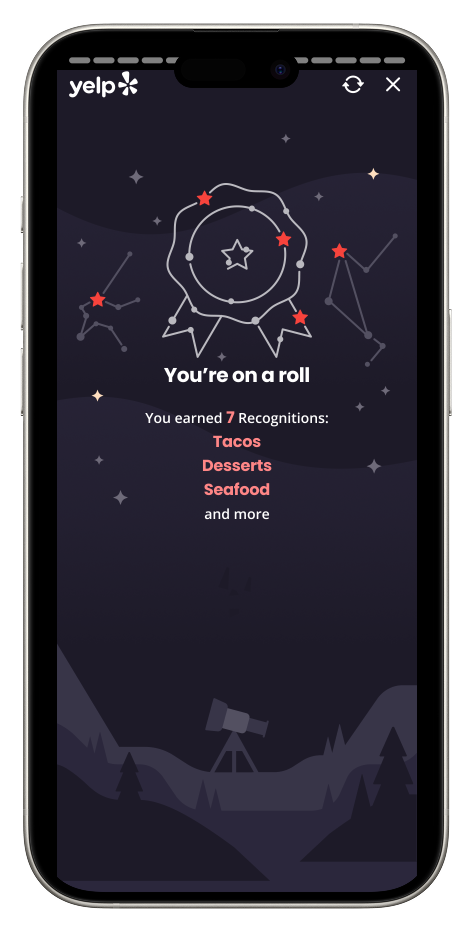
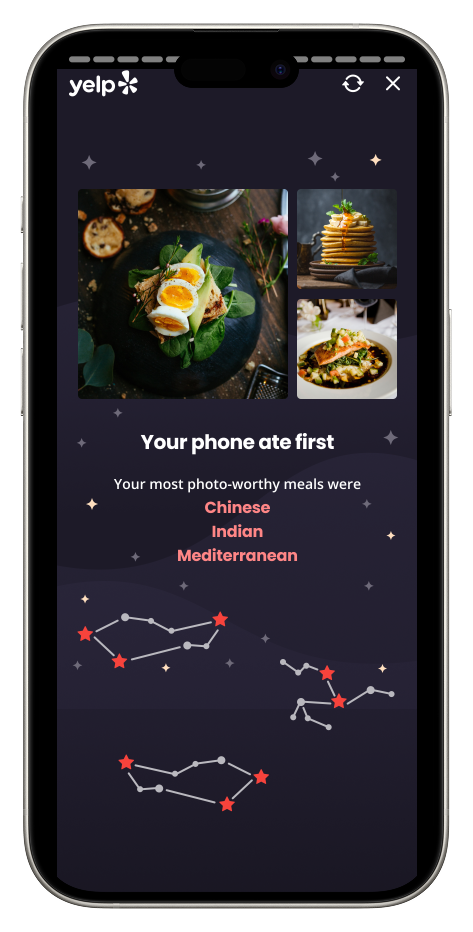
Overall ‘Year on Yelp’ experience
2. FULL CREATIVE:
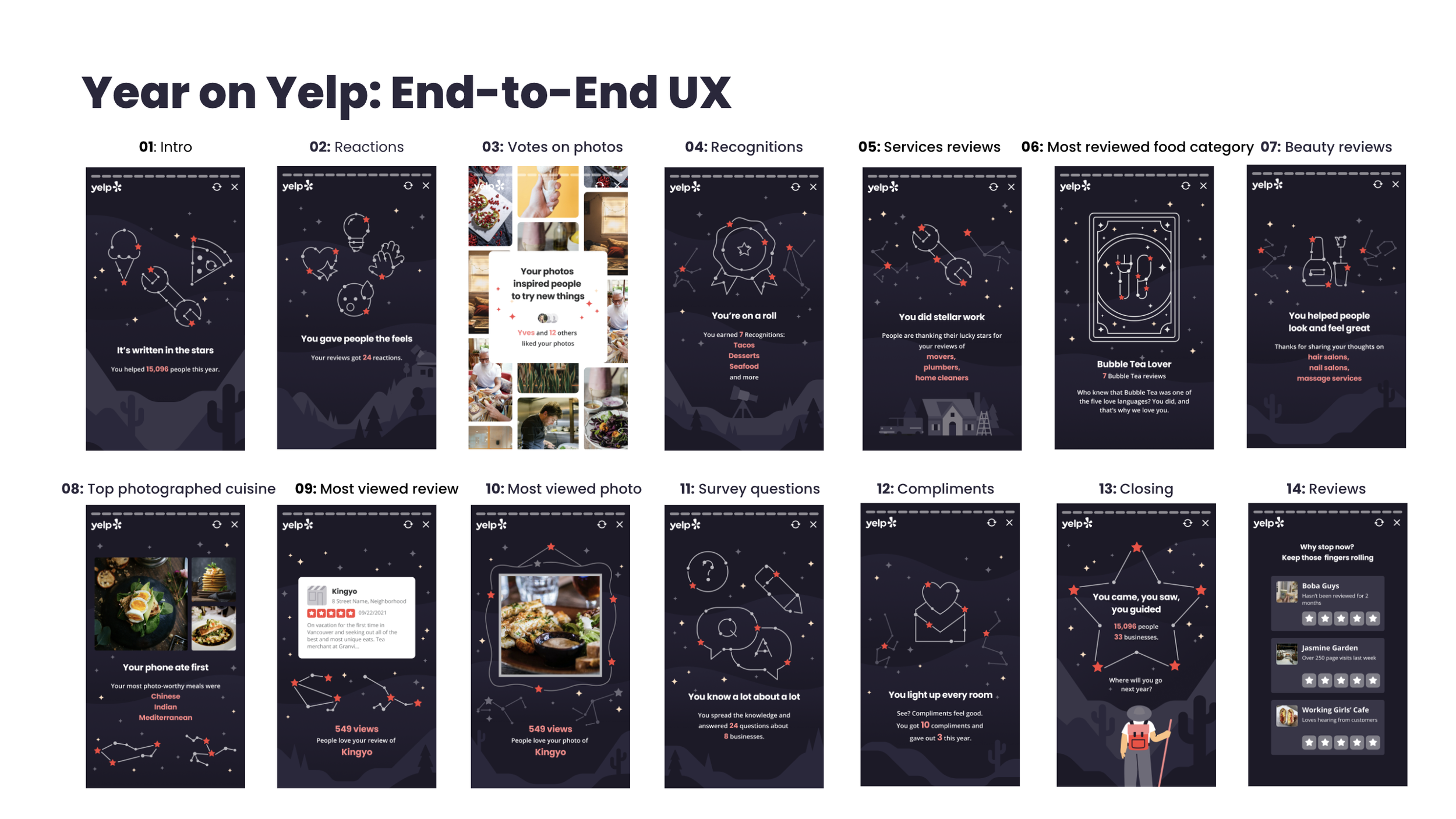
Full creative
[IX] OUTCOMES
Wins:
1. User view rate: 84% increase in eligible users viewing their experience
2. Reviews submitted: 29.4% increase in reviews submitted.
3. Share rate: 82.4% increase in share rate (ancillary).
4. Entry Point Click Thru Rate: 90.9% increase in email click thru rate (CTR) & 70.4% increase in modal click thru rate
Learnings:
1. Overall, we saw an improvement across all key metrics; however, the level of effort was quite substantial for the reach (~1.9M users) and absolute number of reviews submitted (~10K) for this initiative.
2. We saw user fatigue in terms of Year in Reviews; whereas only 27% of users that viewed YOY in 2023, viewed it again in 2024.
3. Stricter eligibility meant fewer people saw it, which we realized wasn’t a good strategy.
4. Leaning into ‘thematic’ copy for entrypoints meant that fewer users understood and opened the creative, thus leading to bad CTR & overall engagement being lower than expected.
5. Co-ordinating work across many different xfn partners was tough and added ambiguity around the theme, engg costs & creative ownership & execution continued to be a challenge.